A morsel of never-before-seen alien rock has been dug up in a limestone quarry in Sweden, where it had lain deeply buried for about 470 million years, scientists said Tuesday.
The biscuit-sized remains are unlike any other meteorite found on Earth to date, and may shed light on the history and formation of our Solar System, they reported in the journal Nature Communications.
Dubbed Oest 65, it is thought to be a splinter of a potato-shaped rock some 20-30 kilometres (12-19 miles) wide, which had smashed into another much larger body, sprinkling our adolescent planet with debris.
Previously, remnants of only one of the two rocks had been found, in the form of meteorites called chondrites.
But now scientists believe they have unearthed a piece of the second space orb, boosting the theory of a major smash-up between two galactic travellers.
It is thought that the breakup of the bigger chondrite body, about 100-150 km across, had yielded a major cluster of rocky debris in the asteroid belt between Mars and Jupiter.
The resultant flux of extraterrestrial material, some of which rained down on Earth, coincided with a massive expansion of invertebrate ocean life at a time our planet's landmass was largely fused together into a supercontinent called Gondwana.
"The single meteorite that we now found… is of a type that we do not know of from today's world," study co-author Birger Schmitz of Lund University in Sweden told AFP.
Along with about 100 chondrite pieces discovered to date, the new alien fragment had sunk to the floor of an ocean covering parts of what today is a limestone quarry in southern Sweden.

'Extinct' space rock?
"The object contains very high concentrations (compared to Earth materials), of elements such as iridium, which is very rare on Earth," Schmitz explained by email.
"The meteorite also contains high concentrations of rare isotopes of the element Neon"—and in different proportions than in chondrites.
The team measured telltale signs of cosmic radiation in the meteorite to determine how long it had flown around in space before crashing to Earth.
"Our meteorite fell 470 million years ago," said Schmitz—more or less the same period as the chondrite fragments.
The mysterious morsel "may be a fragment of the impactor that broke up the (chondrite) parent body," concluded the study.

The extraterrestrial lander may be the first documented example of an "extinct meteorite"—so called because it's parent body had been entirely consumed by space collisions, meaning no more fragments can fall to Earth today.
Chondrites still drop to our planet every now and then.
The findings mean that today's meteorites—on which scientists base much of their assumptions about our Solar System's formation—are not fully representative of what is, and once was, out there.
"Apparently, there is potential to reconstruct important aspects of solar-system history by looking down on Earth sediments, in addition to looking up at the skies," wrote the study authors.
 Explore further: Meteorite minerals hint at earth extinctions, climate change
More information: A new type of solar-system material recovered from Ordovician marine limestone, Nature Communications, nature.com/articles/doi:10.1038/ncomms11851
Read more at: http://phys.org/news/2016-06-unknown-alien-swedish-quarry.html#jCp
A morsel of never-before-seen alien rock has been dug up in a limestone quarry in Sweden, where it had lain deeply buried for about 470 million years, scientists said Tuesday.
The biscuit-sized remains are unlike any other meteorite found on Earth to date, and may shed light on the history and formation of our Solar System, they reported in the journal Nature Communications.
Dubbed Oest 65, it is thought to be a splinter of a potato-shaped rock some 20-30 kilometres (12-19 miles) wide, which had smashed into another much larger body, sprinkling our adolescent planet with debris.
Previously, remnants of only one of the two rocks had been found, in the form of meteorites called chondrites.
But now scientists believe they have unearthed a piece of the second space orb, boosting the theory of a major smash-up between two galactic travellers.
It is thought that the breakup of the bigger chondrite body, about 100-150 km across, had yielded a major cluster of rocky debris in the asteroid belt between Mars and Jupiter.
The resultant flux of extraterrestrial material, some of which rained down on Earth, coincided with a massive expansion of invertebrate ocean life at a time our planet's landmass was largely fused together into a supercontinent called Gondwana.
"The single meteorite that we now found… is of a type that we do not know of from today's world," study co-author Birger Schmitz of Lund University in Sweden told AFP.
Along with about 100 chondrite pieces discovered to date, the new alien fragment had sunk to the floor of an ocean covering parts of what today is a limestone quarry in southern Sweden.
'Extinct' space rock?
"The object contains very high concentrations (compared to Earth materials), of elements such as iridium, which is very rare on Earth," Schmitz explained by email.
"The meteorite also contains high concentrations of rare isotopes of the element Neon"—and in different proportions than in chondrites.
The team measured telltale signs of cosmic radiation in the meteorite to determine how long it had flown around in space before crashing to Earth.
"Our meteorite fell 470 million years ago," said Schmitz—more or less the same period as the chondrite fragments.
The mysterious morsel "may be a fragment of the impactor that broke up the (chondrite) parent body," concluded the study.
The extraterrestrial lander may be the first documented example of an "extinct meteorite"—so called because it's parent body had been entirely consumed by space collisions, meaning no more fragments can fall to Earth today.
Chondrites still drop to our planet every now and then.
The findings mean that today's meteorites—on which scientists base much of their assumptions about our Solar System's formation—are not fully representative of what is, and once was, out there.
"Apparently, there is potential to reconstruct important aspects of solar-system history by looking down on Earth sediments, in addition to looking up at the skies," wrote the study authors.
Explore further: Meteorite minerals hint at earth extinctions, climate change
More information: A new type of solar-system material recovered from Ordovician marine limestone, Nature Communications, nature.com/articles/doi:10.1038/ncomms11851
Read more at: http://phys.org/news/2016-06-unknown-alien-swedish-quarry.html#jCp
Sommarens stora nyhet 2016:
Lundageolog hittade "utdöd meteorit"
Sent ska syndaren vakna. Så: W-bloggen saxar stolt pressmeddelandet från Lunds universitet 15 juni:
*** Geologen Birger Schmitz vid naturvetenskapliga fakulteten, Lunds universitet, har hittat fossilet av en utdöd meteorit som kolliderade med jorden för omkring 470 miljoner år sedan. Det fossila meteoritfyndet är det första i sitt slag och av en typ som inte längre faller på jorden. Upptäckten, som kan leda till ny kunskap om solsystemet, uppmärksammas både nationellt och internationellt.
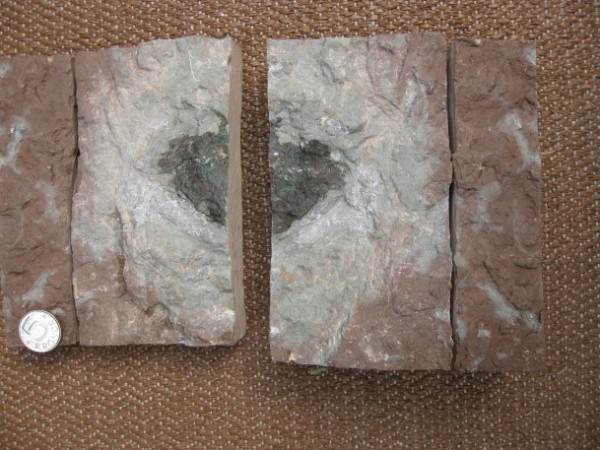
Den utdöda meteoriten kan leda till ny kunskap om solsystemet. Foto: Birger Schmitz/Mario Tassinari
*** Ingen vet hur meteoritflödet till jorden sett ut de senaste 500 miljoner åren eller dessförinnan. Forskare har helt enkelt antagit att meteoriterna var uppbyggda på samma sätt då som nu och att flödet av meteoriter inte förändrats över tiden. Men så är det sannolikt inte menar Birger Schmitz som gjorde fyndet i ett stenbrott vid Kinnekulle utanför Lidköping tillsammans med Mario Tassinari, hedersdoktor vid Lunds universitet.
*** Fossilet de hittade vänder upp och ner på rådande uppfattning om meteoriter, eftersom det är av en typ som inte finns representerad bland nutida meteoriter. Det har helt enkelt en annan sammansättning än alla kända grupper av meteoriter.
– Det ger en stark indikation om att meteoritflödet till jorden, helt i strid med rådande bild, kan ha varit lika annorlunda för 470 miljoner år sedan som dåtidens djurliv var jämfört med nutida djur, säger Birger Schmitz.
*** Han och Mario Tassinari kallar därför fyndet för ”utdöd meteroit”, en sorts meteoriternas dinosaurie. Med utdöd meteorit menar de en meteorit vars föräldrakropp förstördes i forntiden. Därför kommer den här typen av meteoriter aldrig mer att falla på jorden.
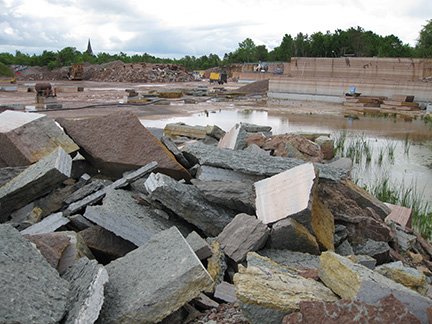
Den utdöda meteoriten hittades i Thorsbergs stenbrott utanför Lidköping. I bakgrunden syns Österplana kyrka som ger namn åt fyndet. Foto: Birger Schmitz
*** Fyndet indikerar att dagens meteoriter inte är representativa för vad som finns i asteroidbältet. Enligt Birger Schmitz kan det vara så att olika processer i rymden påverkar så att meteoriter kommer från olika delar av asteroidbältet under olika geologiska perioder.
– Den utdöda meteoriten som vi hittat kommer i grunden att förändra synen på vad meteoriter är. Kanske är det så att vår bild av solsystemets historia i hög grad bygger på ett kraftigt fraktionerat urval av det material som faktiskt finns därute. Om det är så får det stora konsekvenser, säger Birger Schmitz.
PS.
Hela artikeln "A new type of solar-system material recovered from Ordovician marine limestone" om den utdöda meteoriten som härrör från asteroiden som slog itu L-kondriternas moderasteroid finns här på Nature Communications sajt.
L-kondriterna ramlar fortfarande ner på jordklotet efter 470 miljoner år och är resultatet av en gigantisk kollision i asteroidbältet. Astronomer tror sig dessutom ha identifierat de resterande asteroider som finns kvar därute. Livet och evolutionen på jorden fick en "kickstart" åt vårt håll tack vare detta dramatiska skeende.
A morsel of never-before-seen alien rock has been dug up in a limestone quarry in Sweden, where it had lain deeply buried for about 470 million years, scientists said Tuesday.
The biscuit-sized remains are unlike any other meteorite found on Earth to date, and may shed light on the history and formation of our Solar System, they reported in the journal Nature Communications.
Dubbed Oest 65, it is thought to be a splinter of a potato-shaped rock some 20-30 kilometres (12-19 miles) wide, which had smashed into another much larger body, sprinkling our adolescent planet with debris.
Previously, remnants of only one of the two rocks had been found, in the form of meteorites called chondrites.
But now scientists believe they have unearthed a piece of the second space orb, boosting the theory of a major smash-up between two galactic travellers.
It is thought that the breakup of the bigger chondrite body, about 100-150 km across, had yielded a major cluster of rocky debris in the asteroid belt between Mars and Jupiter.
The resultant flux of extraterrestrial material, some of which rained down on Earth, coincided with a massive expansion of invertebrate ocean life at a time our planet's landmass was largely fused together into a supercontinent called Gondwana.
"The single meteorite that we now found… is of a type that we do not know of from today's world," study co-author Birger Schmitz of Lund University in Sweden told AFP.
Along with about 100 chondrite pieces discovered to date, the new alien fragment had sunk to the floor of an ocean covering parts of what today is a limestone quarry in southern Sweden.
'Extinct' space rock?
"The object contains very high concentrations (compared to Earth materials), of elements such as iridium, which is very rare on Earth," Schmitz explained by email.
"The meteorite also contains high concentrations of rare isotopes of the element Neon"—and in different proportions than in chondrites.
The team measured telltale signs of cosmic radiation in the meteorite to determine how long it had flown around in space before crashing to Earth.
"Our meteorite fell 470 million years ago," said Schmitz—more or less the same period as the chondrite fragments.
The mysterious morsel "may be a fragment of the impactor that broke up the (chondrite) parent body," concluded the study.
The extraterrestrial lander may be the first documented example of an "extinct meteorite"—so called because it's parent body had been entirely consumed by space collisions, meaning no more fragments can fall to Earth today.
Chondrites still drop to our planet every now and then.
The findings mean that today's meteorites—on which scientists base much of their assumptions about our Solar System's formation—are not fully representative of what is, and once was, out there.
"Apparently, there is potential to reconstruct important aspects of solar-system history by looking down on Earth sediments, in addition to looking up at the skies," wrote the study authors.
Explore further: Meteorite minerals hint at earth extinctions, climate change
More information: A new type of solar-system material recovered from Ordovician marine limestone, Nature Communications, nature.com/articles/doi:10.1038/ncomms11851
Read more at: http://phys.org/news/2016-06-unknown-alien-swedish-quarry.html#jCp
Binär pulsar på andra sidan Vintergatan
Med ett batteri av instrument i rymden och på jorden, har astronomer identifierat den binära pulsaren 2S11553-542 som liggande minst men sannolikt betydligt mer än 15 kiloparsec från oss (1 kpc = drygt 3 000 ljusår) – på andra sidan Vintergatan i spiralarmen som sträcker sig via stjärnbilderna Scutom/Skölden och Centaurus.
Ryssar på hugget
Nya ryska studier av de kolliderande galaxmedlemmarna i Arp 194 och stjärnbildningen i bryggan har precis publicerats.
Trafikolyckor i kosmos tillhör mer regeln än undantaget. En av pionjärerna, som redan 1937 diskuterade ämnet, var dåvarande lundaastronomen Erik Holmberg.
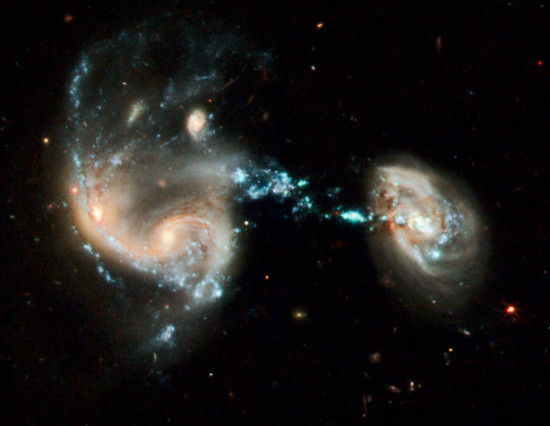
Bildkälla: ESA/NASA/HST
Fall för Sherlock Holmes på LUB…
Mystiskt: I samlingarna på Lunds universitetsbibliotek från Gamla obsis och 1800-talet finns en mapp som kallas "fallet med ej tillbakalagda kulan". Vad handlar detta om? Sherlock Holmes skulle älskat utmaningen.
Vår gode professor Dainis Dravins tror att det handlar om ett klassiskt moment i statistiken, att räkna på sannolikheten för att man ur en hög kulor tar upp en viss kula. En som "sannolikt" höll på med sånt var astronomiprofessorn och statistikgeniet C V L Charlier.
Vid tillfälle ska mappen synas in situ.

Bildkälla: pixaby
… och på Ceres
Mysteriet med Ceres och bristen på stora kratrar ("The Case of the Missing Ceres Craters")) diskuteras här på JPL:s sajt.
En förklaring kan vara att Ceres inte tillhör det ursprungliga asteroidbältet och därför inte bombarderats av större asteroider utan ursprungligen härrör från den transneptuniska världen.
W-bloggen i katedern
Om inte om… i yngre år lekte jag ibland med idén att utbilda mig till gymnasielärare, dock inte i matte och fysik. Hade katederundervisningen funnits kvar, är det fullt möjligt. Men jollen på världshavet drog med strömmarna åt helt andra stränder.
Dock kände jag mig för när jag härom dan gästade W-bloggsmedarbetaren Lars Olefeldt och vi besökte hans födelseort Kvidinge. Där finns ett naggande gott litet museum med en gammal skolsal, och det är klart att katedern skulle inspekteras:
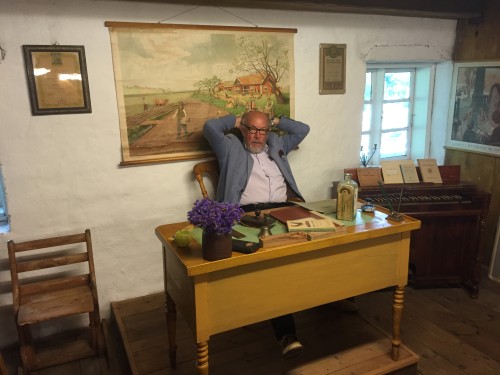
Fel man på rätt plats? Foto:Lars Olefeldt
Flaskan på bordet innehöll INTE Gammel Dansk!?!
Utflyktens stora mål var förstås det kitschiga monumentet från 1826 i Kvidinge, uppsatt över kronprinsen, dansken Carl August som på Kvidinge hed föll av hästen under en husarövning 1810 och dog. Därmed öppnades upp för bernadottarna på den svenska tronen.
Efter obduktionen i Kvidinge, slängde en nogsam städerska tillvaratagna inälvor och kroppsvätskor.
Olyckan drog med sig en massa saker i vår dramatiska historia. Gustavianerna misstänktes för att ha förgiftat Carl August, och detta ledde under liktåget i Stockholm till att Axel von Fersen drogs ut ur sin vagn och massakrerades av Stockholmsmobben.
Intressant med Carl August för oss inom naturvetarcommunityn är att han var den förste kunglige som invaldes som hedersledamot i Kungliga Vetenskapsakademien (1810) – kronprinsessan Victoria är den senaste.

Här skedde olyckan – där står monumentet. Foto: Lars Olefeldt
Kvidinges store son är folkskolläraren Johan Stenqvist, som uppfann den blå skrivboken. 1887 fick sonen Josef David anställning hos sin far, Johan som försäljare. 1894 startade Josef David företaget J D Stenqvist AB.