Nr 64 2014
Solvinden tränger igenom jordens magnetfält
"Uppsala-logen" av IRF, Institutet för rymdfysik, har fångat omvärldens intresse: Postdoc-forskaren Daniel Graham har med hjälp av ESA:s formationsflygande Cluster-satelliter studerat vad som händer när solvinden brakar in i jordens magnetfält på en höjd av 60 000 km.
W-bloggen återger nedan större delen av den svenska pressrelisen som har drygt en vecka på nacken:
 ☆ Rymden är inte tom. Från solen blåser en vind med laddade partiklar och magnetfält. Ibland kan den här solvinden ta sig igenom jordens magnetfält. Forskare vid Institutet för rymdfysik, IRF, i Uppsala har nu svar på en av frågorna om hur detta egentligen går till.
☆ När två områden med plasma (elektriskt laddad gas) och magnetiska fält med olika riktning kolliderar, kan de magnetiska fälten "klippas av" och "omkopplas" så att magnetfältets topologi ändras. Sådan magnetisk omkoppling kan ge energi till utbrott på solytan, kan omvandla energi från solvinden som sedan skapar norrsken, och är ett av hindren för att alstra energi genom processer i fusionsreaktorer.
☆ Om två kolliderande områden med plasma har samma densitet, temperatur och styrka (men olika riktning) på magnetfältet, startas symmetrisk omkoppling. Denna process förstår forskare någorlunda. Men det vanliga i naturen är att två områden med plasma har olika egenskaper, till exempel när solvinden möter jordens omgivning. Daniel Graham vid Institutet för rymdfysik har nyligen publicerat en detaljerad studie av sådan asymmetrisk magnetisk omkoppling i Physical Review Letters 112, 215004 (2014).
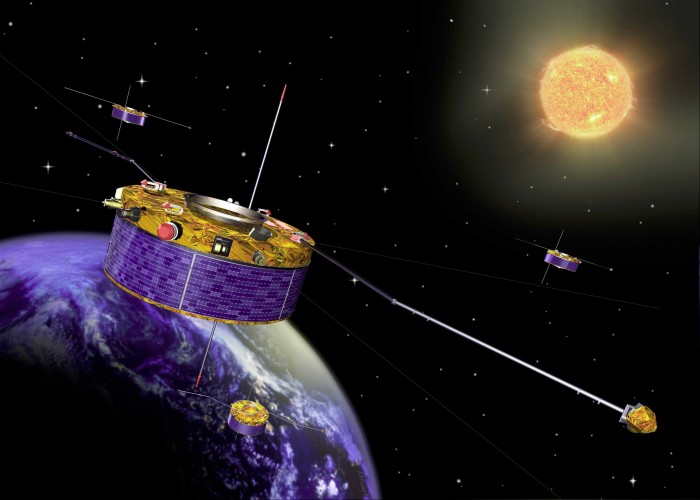
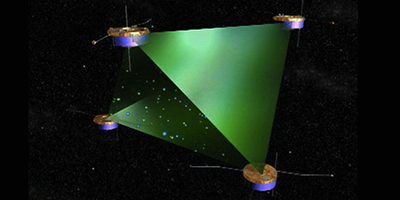
☆ Studien använder data från de fyra europeiska ESA-satelliterna Cluster, som flyger i formation i jordens magnetfält.
– Speciellt viktigt var mätningar med två satelliter bara några tiotals kilometer ifrån varandra, i området där solvinden träffar jordens magnetfält, säger Daniel Graham.
– Vi kan alltså göra detaljerade mätningar för att förstå plasmafysiken, på en höjd av 60 000 km.
☆ Speciellt intressant är upphettningen av elektroner parallellt med det magnetiska fältet i samband med magnetisk omkoppling.
– Vi tror att detta är en viktig pusselbit för att förstå hur magnetisk omkoppling fungerar, hur laddade partiklar kan accelereras, och hur partiklar från olika områden kan blandas med varandra, Våra detaljerade mätningar runt jorden kan användas för att förstå fysiken även i fusionsreaktorer på jorden, och i avlägsna områden i rymden dit vi inte kan skicka satelliter.
Jupiters månar syns även när de förmörkas
Även i Jupiters väldiga slagskugga kan faktiskt de stora månarna, som ju Galileo Galileo upptäckte, ses av både våra jordbundna jätteteleskop som japanernas Hawaii-bjässe Subaru och av Hubble-rymdteleskopet.
En artikel om dessa överraskande infraröd-observationer (förstås!) kommer i juli i Astrophysical Journal, berättas här.
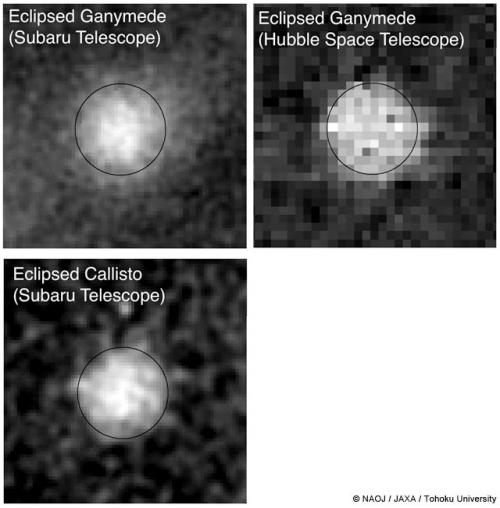

Astronomers using the Subaru Telescope and Hubble Space Telescope have found that Jupiter's Galilean satellites (Io, Europa, Ganymede, and Callisto) remain slightly bright (up to one millionth of their normal state) even when in the Jovian shadow and not directly illuminated by the Sun. The effect is particularly pronounced for Ganymede and Callisto. The finding was made by researchers at Tohoku University, Institute of Space and Astronautical Science/Japan Aerospace Exploration Agency (ISAS/JAXA), National Astronomical Observatory of Japan (NAOJ), and elsewhere.
The mechanism of this phenomenon is still under investigation, but the researchers suggest that indirect forward scattering of sunlight by hazes in the upper Jovian atmosphere could be the reason for the illumination. This effect is similar to the one that causes Earth's moon to look red during a total lunar eclipse.
The type of continuous observations of the Galilean satellites in eclipse made by the Japanese team also provides a much better basis for studying the hazes in Jupiter's atmosphere, which are difficult to study otherwise. In addition, this detailed study method for a planetary atmosphere will provide new insights about the atmospheres of exoplanets, which are only beginning to be studied.
Dr. Tsumura Kohji (FRIS, Tohoku University), the PI on the project, explained that this unexpected finding is really the outcome of attempts to measure diffuse light from the distant universe. "It is a serendipitous discovery made as a by-product of a cosmological study," he said. "It is very interesting that it provides us a new method to investigate the atmosphere of Jupiter and of exoplanets. I will keep studying from nearby space (the solar system and exoplanets) out to the farthest universe through this project."

The research team started its observations with the Subaru Telescope in February of 2012. The idea was to detect the diffuse light from the most distant parts of the universe. To do this, team members planned to use the Galilean satellites in eclipse as "occulters" to block distant background emissions. This would allow an extremely accurate separation of the background light from the very bright foreground radiation from our solar system (known as the zodiacal light).
The team assumed that the Galilean satellites would be "dark" while in Jupiter's shadow, and the difference in brightness[??] between the dark satellite as an occulter and its surrounding sky would allow the team to determine the still-unknown level of background emission from the distant universe. Instead, they found an unexpected surprise: Ganymede and Callisto were still somewhat "bright" (illuminated) even when eclipsed (relative to the expected level of near-zero). Their eclipsed luminosity was one millionth of their un-eclipsed brightness, which is low enough that this phenomenon has been undetected until now.
To understand why the Galileans remain ever-so-slightly bright even when they're in eclipse, the project team of astronomers and planetary scientists considered several theories based on their multi-band observational data, including data from Spitzer Space Telescope. The most plausible is that the Galilean satellites are still illuminated during eclipse by sunlight that is scattered by hazes in the Jovian upper atmosphere. By comparison, the sunlight refracted in the atmosphere does not contribute to the illumination during the eclipse.
Although Jupiter is a familiar planet, there are many unresolved issues about its atmosphere. One example is the origin of the cloud particles composing Jupiter's banded appearance. The cloud particles are assumed to grow from tiny particles called aerosols or hazes. Researchers expect that those hazes form somewhere in the upper part of Jupiter's atmosphere, which is very difficult to observe. The unexpected discovery of haze-induced brightening of the Galileans provides a new way to study the mysterious part of Jupiter's atmosphere. In addition, since astronomers usually observe the planets in our solar system by reflected sunlight, one of the unique aspects of these new observations at Jupiter is that observers can precisely measure the transmitted sunlight through the planetary atmosphere.
This new method of studying the upper atmosphere of Jupiter via transmitted sunlight provides a basis for the study of other planetary systems. Exoplanet discoveries now occur quite regularly and atmospheres around some of them have been investigated using "transit observations" (when the exoplanet passes between us and the host star, resulting in the star becoming slightly dimmer). In such observations, some characteristics of the exoplanet's atmosphere are revealed as host starlight passes through it. This is the same situation seen with Jupiter and its Galilean satellites, and makes studies of transmitted sunlight of the planets in our solar system essential for comparison.
The observations for this project were very challenging because the Galilean satellites (while eclipsed) are extremely faint and they are located next to the incredibly bright disk of Jupiter. In addition, the eclipses only happen at very specific times, and Jupiter and the satellites are continuously in motion during the observations. The complexity of the situation requires the observation procedure to be much more sophisticated. This new discovery required thorough preparations by the project team and conscientious support by the operations staff.
Read more at: http://phys.org/news/2014-06-jupiter-moons-slightly-illuminated-eclipse.html#jCp
Fahad i farten
Fahad Sulehria, vår ex-spaceartist (tyvärr säger jag, men Fahad har bestämt sig), rapporterar på sin Facebok-sida att han fått publicerat en exoplanet-illustration i vetenskapstidskriften Science. Tungttungt och kulkul!
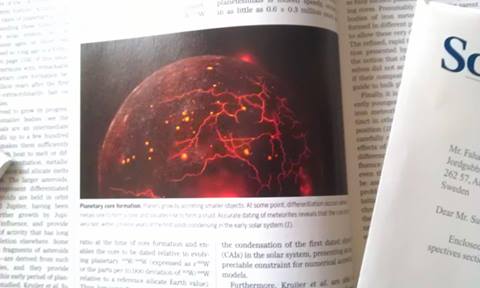
Sitt tidigare rymdkonst-skapande beskriver Fahad i dag som en "slocknad passion".
Spitzer synar liten asteroid
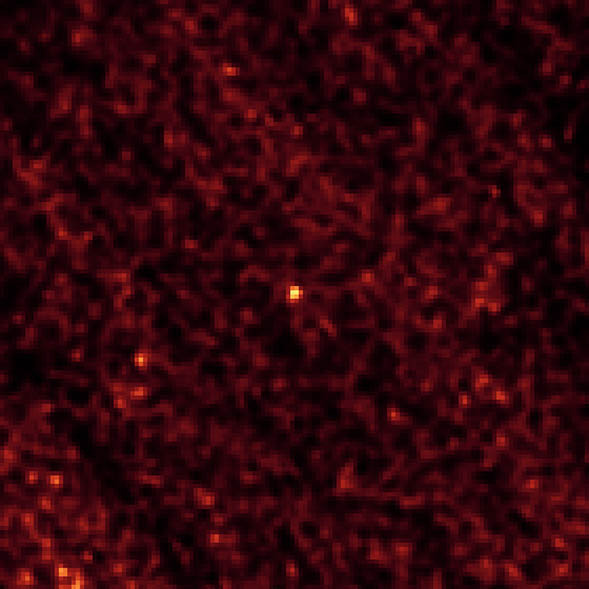
I februari i år höll under tjugo timmar NASA:s Spitzer-sond sitt öga på asteroiden 2011 MD, en av kandidaterna i NASA:s projekt med Asteroid Redirection Mission som går ut på att identifiera, fånga in och omdirigera himlakroppar med riktning mot jorden. Himlakropparna tänks placeras i säkra banor runt månen.
2011 MD visar sig ha en storlek på sex meter och ha en täthet som gör att asteroiden består av en massa – tomrum. Därför passar förmodligen beskrivningen av asteroiden som en lös samling "rymdskrot" bättre in.
En liten explosion för mänskligheten…
…men ett stort steg för den kommande utforskningen av universum.
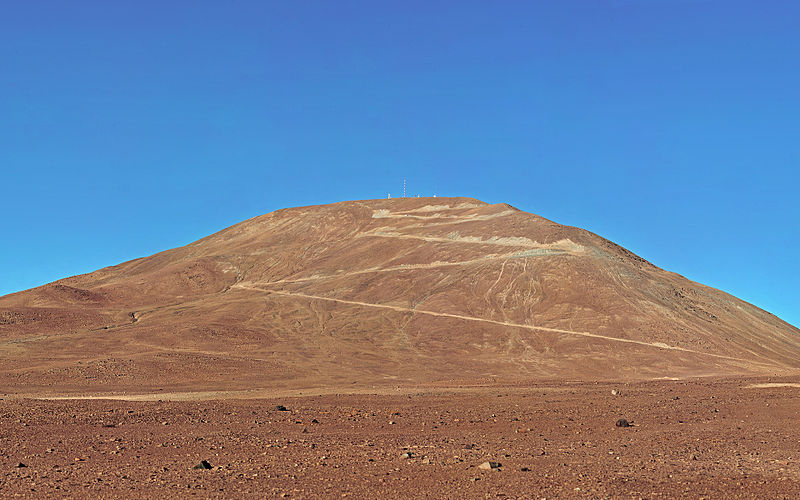
När bergstoppen på berget Cerro Armazones i Chile, där det gigantiska E-ELT ska uppföras, sprängdes härom dan, såg det ut så här – före, under och efter:
1
2
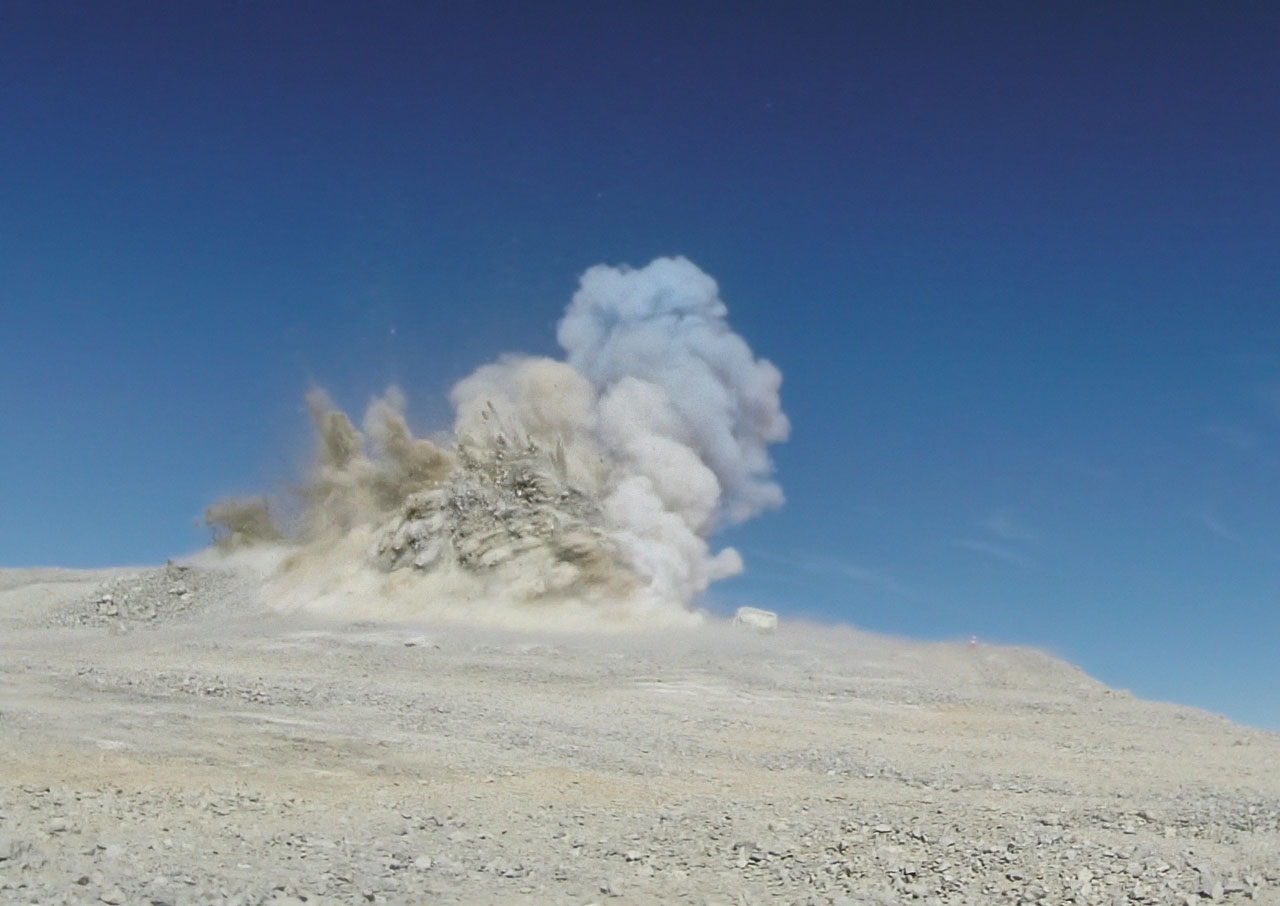
3
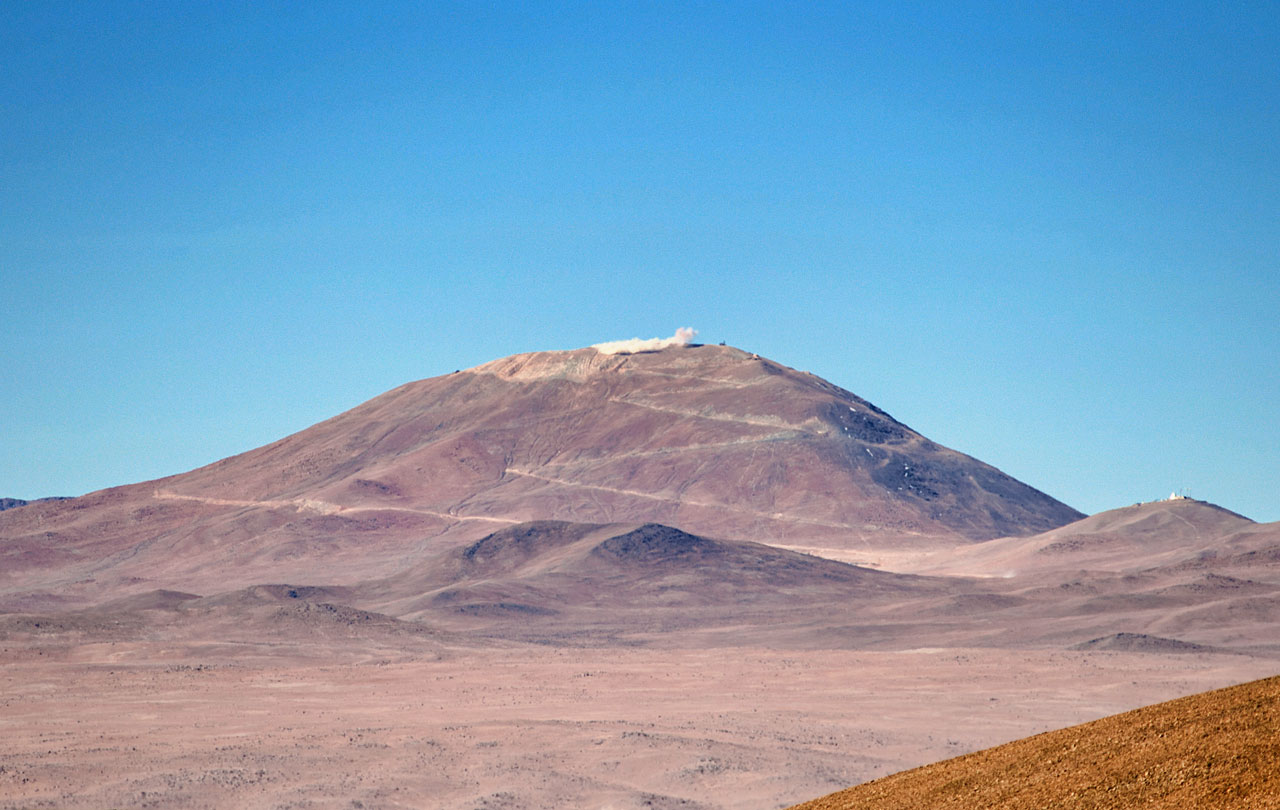
4
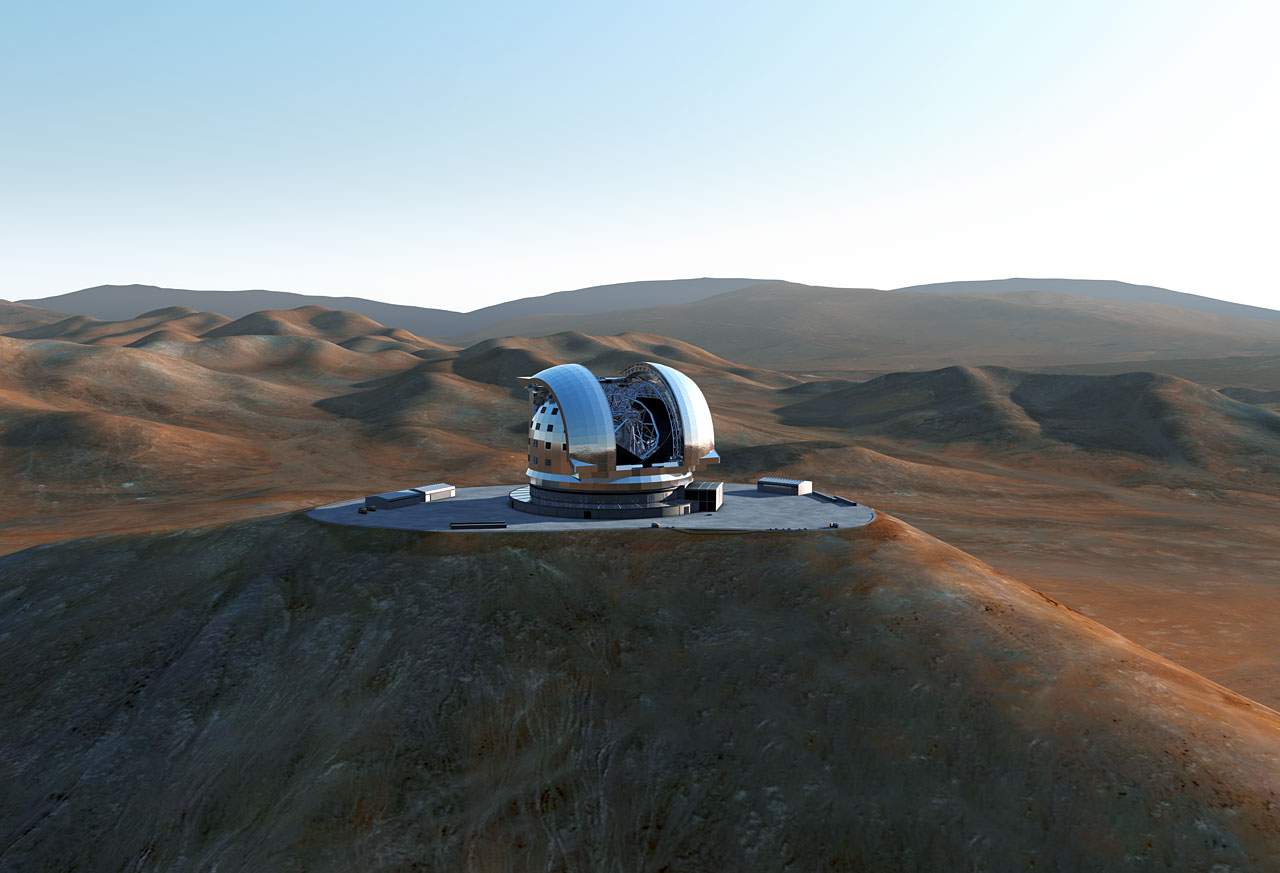
Skål i planetöl!
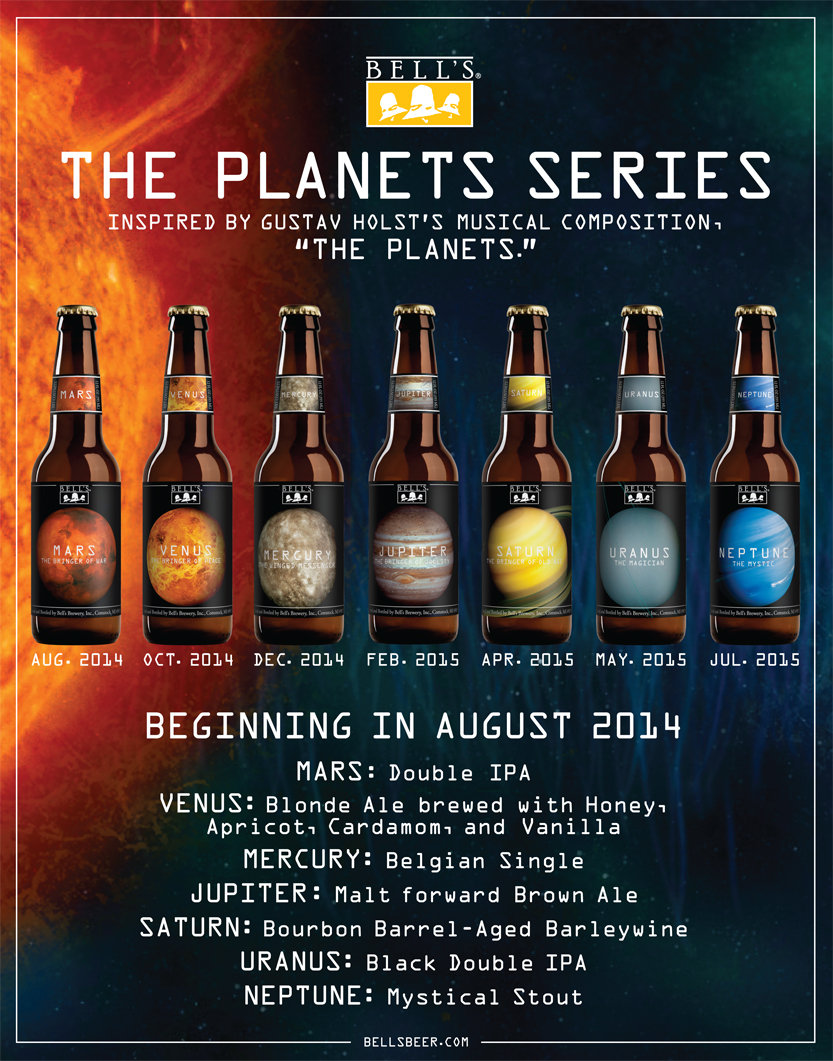
Knappt har vi hunnit sjunga Einstein-snapsvisan (se förra W-bloggen) förrän bloggens trogne bisittare Christian Vestergaard har hittat fram till en kul amerikansk ölsajt i vilken påpekas att bryggeriet Bell´s – hemstat Michigan – med start i augusti i år börjar släppa en hel svit "planetöl".
Det är Gustav Holsts astrologiska planetmusik som inspirerat mikrobryggaren Larry Bell, uppenbarligen.